CHALLENGE 01 / STRATEGIC DIRECTION

Invest with intention.

Where should we focus and invest?

Define portfolio priorities, review sourcing options and align operating models with the market.

SELECTED EXPERIENCE

Explore the work
behind the challenge.

Select a result to preview.

01

Portfolio strategy / Investment decisions

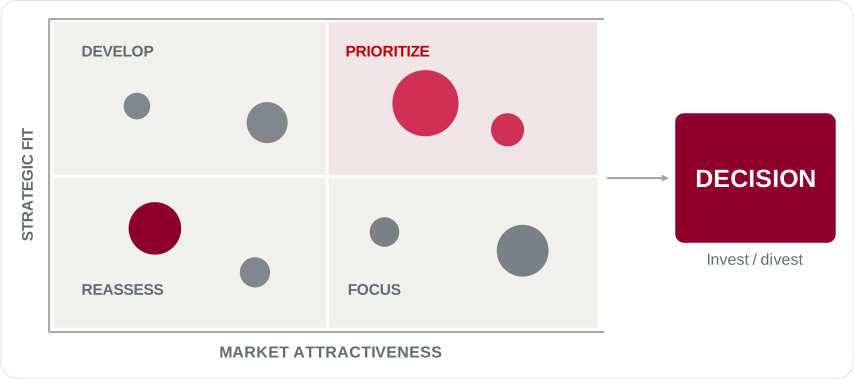
A structured assessment of business topics, markets and competencies creates a sound basis for portfolio development and investment choices.

Explore full case

02
03
SOICON / VISUAL EXPLORATION INTERACTIVE
Conceptual visual model: Portfolio Shaping

A structured assessment of business topics, markets and competencies creates a sound basis for portfolio development and investment choices.

Portfolio Shaping

SCROLL / IN-DEPTH

Beyond the headline.
Inside the work.

Explore the complete cases directly on this page.

Portfolio ShapingOpen individual case ↗
RESULT
Strategic Direction

Invest with direction.

A structured assessment of business topics, markets and competencies creates a sound basis for portfolio development and investment choices.

ClientGerman organization · more than 1,000 employees

Strategic Direction

Portfolio strategy / Investment decisions

Conceptual illustration of Portfolio ShapingVISUAL MODEL / SCHEMATIC

01 / THE CHALLENGE

Understand the situation.

Competencies and business topics had grown historically and opportunistically.

02 / THE APPROACH

Design a response.

Make the existing business topics and competencies visible in a coherent thematic map.

03 / WHAT CHANGED

Build a basis for action.

A portfolio built on choices, not habit.

OUR APPROACH

Make the portfolio a decision system.

Competencies and business topics had grown historically and opportunistically. The organization lacked a consistent fact base to decide where to invest, develop or divest.

The steps summarize the engagement described in SOICON's existing Results materials. They are not performance measurements.

01
Map the portfolio

Make the existing business topics and competencies visible in a coherent thematic map.

02
Evaluate opportunities

Assess demand, competitive position and profitability across relevant markets.

03
Set priorities

Differentiate core topics from areas requiring development, reassessment or divestment.

04
Support decisions

Translate the analysis into clear decision proposals for portfolio and investment planning.

WHAT CHANGED / RESULT

A portfolio built on choices, not habit.

A structured view of business topics and markets, with transparent priorities and a decision basis for investments and divestments.

RESULT
Strategic Direction

Focus on what matters most.

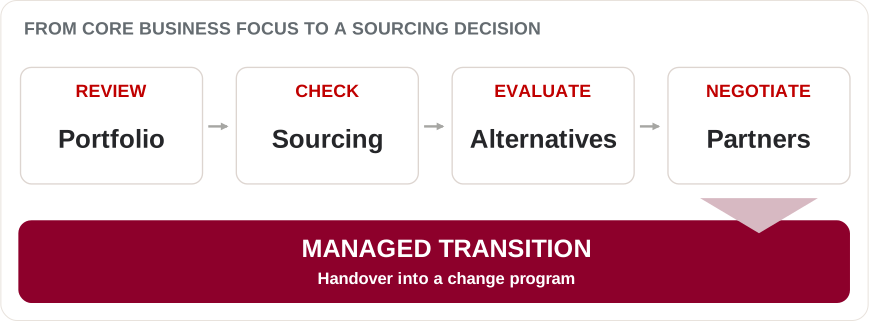
A systematic sourcing assessment connects strategic focus with commercial options, partner selection and an executable transition.

ClientGerman organization · more than 1,000 employees

Strategic Direction

Sourcing strategy / Organizational transition

Conceptual illustration of OutsourcingVISUAL MODEL / SCHEMATIC

01 / THE CHALLENGE

Understand the situation.

Historically developed structures were not sufficiently competitive in quality or cost.

02 / THE APPROACH

Design a response.

Identify activities and structures to retain, reshape or examine for sourcing.

03 / WHAT CHANGED

Build a basis for action.

Strategic focus with a credible transition path.

OUR APPROACH

Turn strategic choices into a viable transition.

Historically developed structures were not sufficiently competitive in quality or cost. Management needed to decide which activities belonged to the core business and which could be sourced externally.

The steps summarize the engagement described in SOICON's existing Results materials. They are not performance measurements.

01
Review the portfolio

Identify activities and structures to retain, reshape or examine for sourcing.

02
Assess sourcing options

Evaluate alternatives, build business cases and assess potential partners.

03
Negotiate solutions

Clarify commercial and organizational implications through partner negotiations.

04
Hand over to change

Prepare a structured transition and transfer agreed measures to a change program.

WHAT CHANGED / RESULT

Strategic focus with a credible transition path.

A differentiated assessment of sourcing alternatives, supported by business cases and a structured approach to partner negotiation and implementation.

Market OrientationOpen individual case ↗
RESULT
Strategic Direction

Organize around the market.

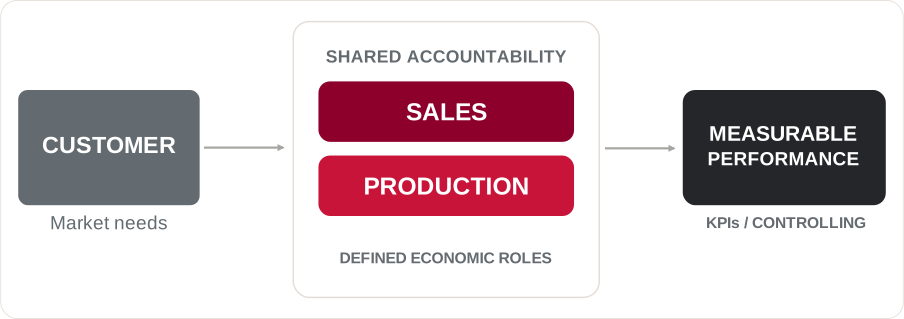
A market-oriented operating model connects economic accountability, cross-functional collaboration and measurable performance.
ClientGerman organization · more than 800 employees
Strategic Direction

Operating model / Performance indicators

Conceptual illustration of Market OrientationVISUAL MODEL / SCHEMATIC

01 / THE CHALLENGE

Understand the situation.

A spin-off operating in a heavily regulated environment needed to develop into a more market-oriented organization with clearer economic responsibilities..

02 / THE APPROACH

Design a response.

Define economic accountability across commercial and production-related key roles.

03 / WHAT CHANGED

Build a basis for action.

Clear accountability, closer to the customer.

OUR APPROACH

Put the market into the operating model.

A spin-off operating in a heavily regulated environment needed to develop into a more market-oriented organization with clearer economic responsibilities.

The steps summarize the engagement described in SOICON's existing Results materials. They are not performance measurements.

01
Clarify responsibility

Define economic accountability across commercial and production-related key roles.

02
Make performance visible

Introduce meaningful performance indicators to support steering and decisions.

03
Align the organization

Coordinate the organizational transition with communication and change measures.

04
Adapt business processes

Review and improve operating processes for the changed market environment.

WHAT CHANGED / RESULT

Clear accountability, closer to the customer.

A defined model of commercial responsibilities, measurable indicators and adapted processes to support a more market-oriented organization.